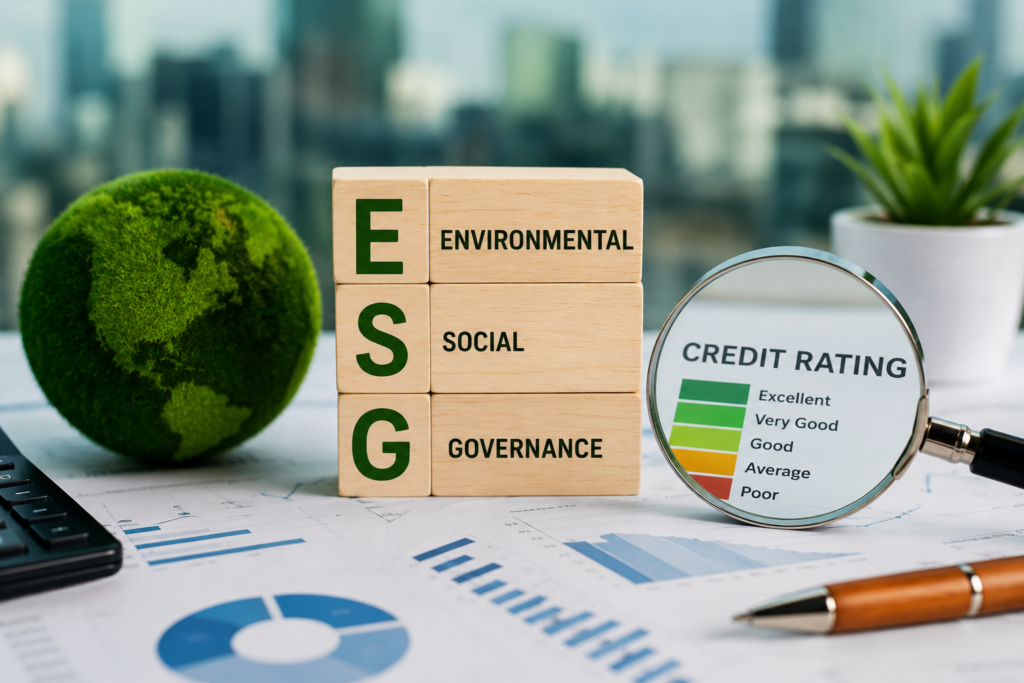
As sustainability increasingly shapes investment decisions, regulators are placing greater scrutiny on how Environmental, Social and Governance (ESG) considerations influence financial markets.
The UK’s Financial Conduct Authority (FCA) has recently raised concerns around the role of ESG factors in credit ratings, highlighting growing questions about transparency, consistency, methodology, and potential conflicts of interest in sustainability-linked assessments.
Credit ratings play a significant role in financial markets, influencing investment decisions, lending, risk assessments, and capital allocation. As ESG considerations become more integrated into financial systems, regulators are increasingly asking whether organisations and investors fully understand how sustainability-related risks are being measured and applied.
Why the FCA Is Raising Concerns
The FCA’s concerns centre around several key areas:
- Greater transparency in ESG methodologies and data sources
- Clearer explanations of how sustainability risks influence ratings
- Improved management of conflicts of interest
- More consistent stakeholder engagement and complaints processes for rated entities and investors
One challenge regulators continue to face is that ESG assessments can differ significantly between providers. Two rating agencies may assess the same company differently based on methodology, weighting systems, sector assumptions, or data interpretation. This inconsistency can create confusion for investors and corporates trying to evaluate sustainability performance and long-term risk.
The FCA is therefore pushing toward stronger disclosure standards that help market participants better understand how ESG ratings are developed and what underlying assumptions influence outcomes.
Why This Matters for Business
For organisations, the conversation extends beyond compliance.
Investors, financiers, insurers, lenders, and stakeholders increasingly rely on ESG-related indicators when assessing resilience, governance quality, operational risks, and long-term performance. Companies are under growing pressure to demonstrate credible sustainability practices supported by measurable business outcomes rather than broad claims.
The FCA’s position reinforces a broader market shift: sustainability information must be credible, transparent, and commercially relevant.
Businesses may increasingly need to demonstrate:
- Better ESG governance and reporting transparency
- Clear sustainability-linked risk management approaches
- Reliable and auditable sustainability data
- Stronger integration between ESG performance and business strategy
A Growing Global Trend
The UK is not alone in increasing oversight of ESG-related ratings and disclosures.
Across major financial markets, regulators are moving toward stronger frameworks aimed at improving confidence, comparability, and accountability in sustainable finance. Similar discussions are underway globally as policymakers seek to balance innovation with credibility in ESG markets.
For Africa, these developments are particularly relevant as sustainability transitions increasingly intersect with capital mobilisation, investment readiness, governance, climate resilience, and economic growth.
Looking Ahead
The FCA’s concerns highlight an important reality for sustainability leaders: ESG is evolving from a reporting exercise into a discipline grounded in business implementation, measurable value, and financial accountability.
As sustainability becomes more closely tied to investment and risk decisions, transparency and credibility will remain central to building trust in sustainable finance ecosystems.